Cashwerk Review - All-in-One Workflow Platform for Business Efficiency
Building Systems That Survive Growth: The Cashwerk Architecture Lesson
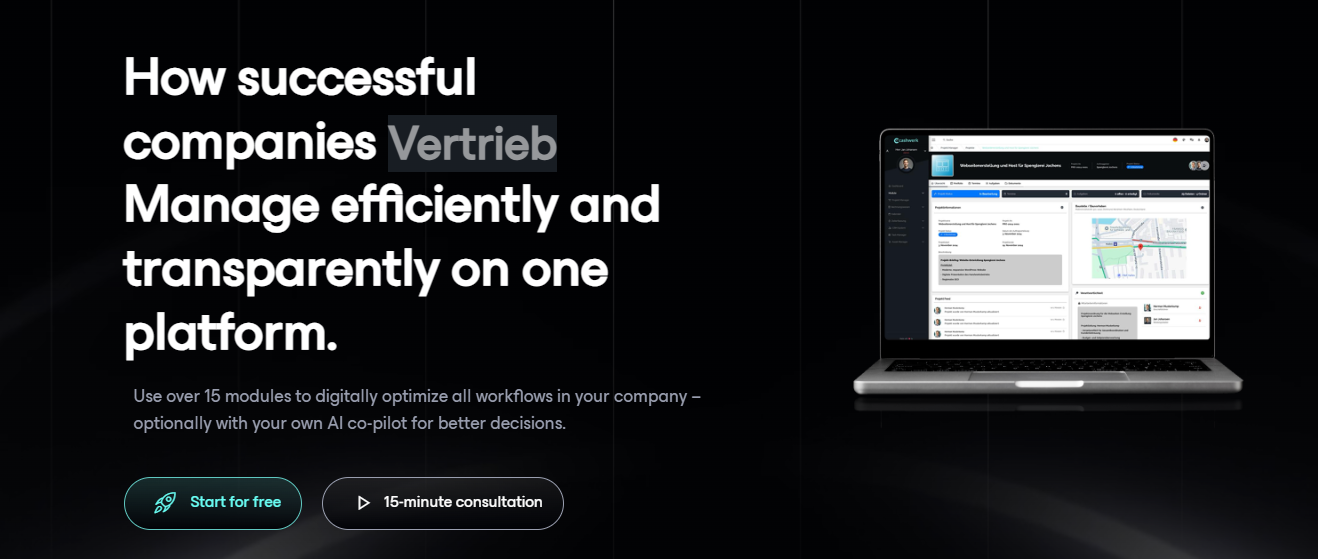
Business growth typically follows a predictable pattern: first systems work at small scale through manual coordination. Success brings hiring. Hiring requires process documentation. Documentation becomes impossible when systems don't communicate.
At 5 people, spreadsheets work. At 15 people, spreadsheets become dangerous. At 50 people, manual data transfer between systems becomes the job of one person who does nothing else.
Cashwerk's architecture insight: businesses that survive growth do so because their operational systems were designed for integration from day one, not bolted together afterward.
The Data Fragmentation Problem at Scale
I studied how scaling SMBs handle operational data:
5-15 person stage: Systems barely communicate. Sales team maintains customer database in their preferred tool. Finance tracks invoices separately. Projects live in Notion. Email is the primary coordination mechanism.
Result: Revenue leakage (unbilled work), compliance risk (missing documents), decision delays (finance works from outdated data).
15-50 person stage: Tool sprawl accelerates. Someone is hired specifically to manage data flows between systems. That person spends 40+ hours weekly on manual data entry and reconciliation—time that could go to strategic work.
Revenue impact: 15% of revenue is genuinely lost through billing gaps and forgotten services.
50+ person stage: Companies at this scale typically have rebuilt systems entirely once already, at tremendous cost and disruption.
Cashwerk targets the 15-50 person stage where growth creates acute pain but budgets don't yet justify expensive enterprise solutions.
Design Philosophy: Revenue Flow as the Central Model
Most business software treats revenue as an output. Cashwerk inverts this: revenue flow is the central nervous system that everything else connects to.
This means:
Customer data flows into Sales: Not replicated across systems, but sourced from one system.
Sales activity flows into Finance: Quotes automatically create invoice templates. Accepted proposals become projects. Projects automatically route to billing.
Project execution flows into Finance: Hours logged become billable amounts automatically. No manual invoice creation.
Support visibility flows everywhere: Customer problems identified in support queue automatically suggest improvements to sales process, project structure, and product direction.
This isn't bolted-on integration. It's architectural. Systems don't need adapters—revenue flow is the native language all modules speak.
Operational Reality: 90-Day Implementation Path
Unlike enterprise ERP projects consuming quarters:
Month 1: Data migration (historical customer data, open projects, outstanding invoices). Team training on core workflows. Parallel operation with legacy systems.
Month 2: Gradual cutover of departments. Sales moves first (customer management), then Projects (time tracking, deliverables), then Finance (invoicing, accounting).
Month 3: Full operation with optimization passes. Team discovers patterns in their own data, improves processes based on visibility they never had before.
No big-bang cutover. No system-down events.
Feature Stack Designed for Interlock
CRM Module: Not a contact database, but a relationship operations center. Every interaction logged and queryable. Sales pipeline visibility shows not just where deals are, but why they're stuck—information automatically pulled from support tickets, project history, communication logs.
Project Management Module: Tracks time, deliverables, team collaboration. Hours logged automatically cost-account against projects. Project profitability becomes real-time visible, not a monthly accounting exercise.
Financial Operations Module: Quote-to-invoice pipeline with automatic routing. Overdue invoice dunning handled automatically. Multi-currency and tax complexity invisible to team—system handles it. Real-time profit & loss visible to everyone, not restricted to accounting team.
Support Module: Ticketing with intelligent routing. Problems escalated to sales as process improvement signals. High-value customer issues escalated immediately. Repeat problems identified and highlighted.
AI Assistant (Casper): Context-aware automation. Understands your complete business and suggests actions: "Create invoice for completed Project X", "Alert Account Manager Y that Client Z's contract renews in 14 days", "Flag this support issue as related to three previous reports of the same problem".
Economic Model: Cost of Tool Sprawl vs. Cost of Consolidation
Typical German SMB with 25 people:
Spreadsheet-based system costs:
- 1 person doing data entry: €4,000/month salary equivalent
- 2-3 people copying data between systems monthly: €500/month lost efficiency
- Revenue leakage from lost hours: €2,000-3,000/month
- Compliance risk: unmeasured but real
- Total hidden cost: €6,500-7,500/month
Cashwerk implementation cost:
- Software: €69/month
- Migration effort: €2,000 one-time
- Training: €800 one-time
- Monthly savings: Data entry person redeployed to revenue work
Payback period: 1-2 weeks
Competitive Position in German Market
Cashwerk competes in a specific niche:
vs. Salesforce: Salesforce wins on ecosystem breadth, loses on price. Cashwerk is 1/10th the cost.
vs. SAP: SAP wins on scale and advanced features. Cashwerk wins on implementation speed and price for SMBs.
vs. Generic integration platforms: Home-built systems on Zapier/Make are cheaper initially but require ongoing maintenance and break during growth.
Unique to Cashwerk: Purpose-built for German business, GDPR/GoBD compliance architecturally baked in, not bolted on afterward.
Realistic Limitations
Learning curve: System has the complexity required to support true integration. Businesses used to single-purpose tools need adjustment time.
Customization flexibility: Core platform is opinionated about how businesses should work. Deep customization requires paying for professional services.
Scalability ceiling: Excellent to 200-300 person organization. Beyond that, enterprise solutions may provide better scaling options.
Integration ecosystem: Fewer pre-built integrations than enterprise platforms. Critical third-party connections sometimes require custom development.
Who Benefits Most
Service agencies managing multiple clients: Multiple clients, projects, billing in one place. Each client has complete profit visibility.
Professional services firms: Billable time tracking, project profitability, client relationship tracking—all unified. Financial team has real-time visibility into firm performance.
Freelancers scaling to teams: Start solo with freelancer plan. Grow to team plan without replacing infrastructure.
Subscription businesses: Recurring billing, customer lifecycle management, churn analysis built in from start.
Manufacturing SMBs: Orders flow to production to accounting automatically. Finance always has current picture of business state.
European compliance-required businesses: Data residency handled correctly. Tax complexity managed. Document retention automated.
Final Verdict
Cashwerk succeeds because it recognizes that growth businesses need systems designed for integration from day one, not assembled from parts after growth has already happened.
It won't appeal to businesses needing maximum customization or bleeding-edge feature breadth. For European SMBs tired of manual data management and growth-constrained by operational complexity, it's the most rational choice available.
Rating: 4.7/5 stars
Delivers: True business system integration, fast implementation, pricing appropriate for SMBs, European compliance architecturally sound, AI-powered process improvement suggestions.
Not perfect: Learning curve steeper than single-purpose tools, customization requires professional services budget.
Ready to align your operational systems with your growth plans?
👉 Try Free and see how unified operations transform your business clarity.
Tags
# Review# Cashwerk# workflow# Enterprise Resource Planning# Customer Relationship Management# Deal-pipeline# Support-Pipeline# Taskmanager# timetracking# project management# Document Management System# workflow Software# platform# all-in-one business platform# ERP solution# CRM software# AI copilot# business automation# GoBD compliant# DSGVO compliant# German hosted platform# small business ERP# mid-sized company software# agency management tool# freelancer business solution# invoice management# project tracking# time tracking software# customer support ticketing# cashflow managementTagPulse Review - AI-Powered System Monitoring with Predictive Alerts
VidSeeds.ai Review - Pre-Upload Video SEO Platform That Analyzes Your Real Footage Before You Hit Publish
Follow for new blogs
Subscribe to our blog
Subscribe to Newsletter
Subscribe to our newsletter to get the best products weekly.